Spring Termite Season In Sydney: What Homeowners Need To Know
Every spring, mature termite colonies around Sydney release winged termites on warm, humid evenings. A swarm near your home is not a reason to panic, but it is a clear signal that a colony is active nearby and that an inspection is worth booking promptly.
Why spring is termite swarming season in Sydney
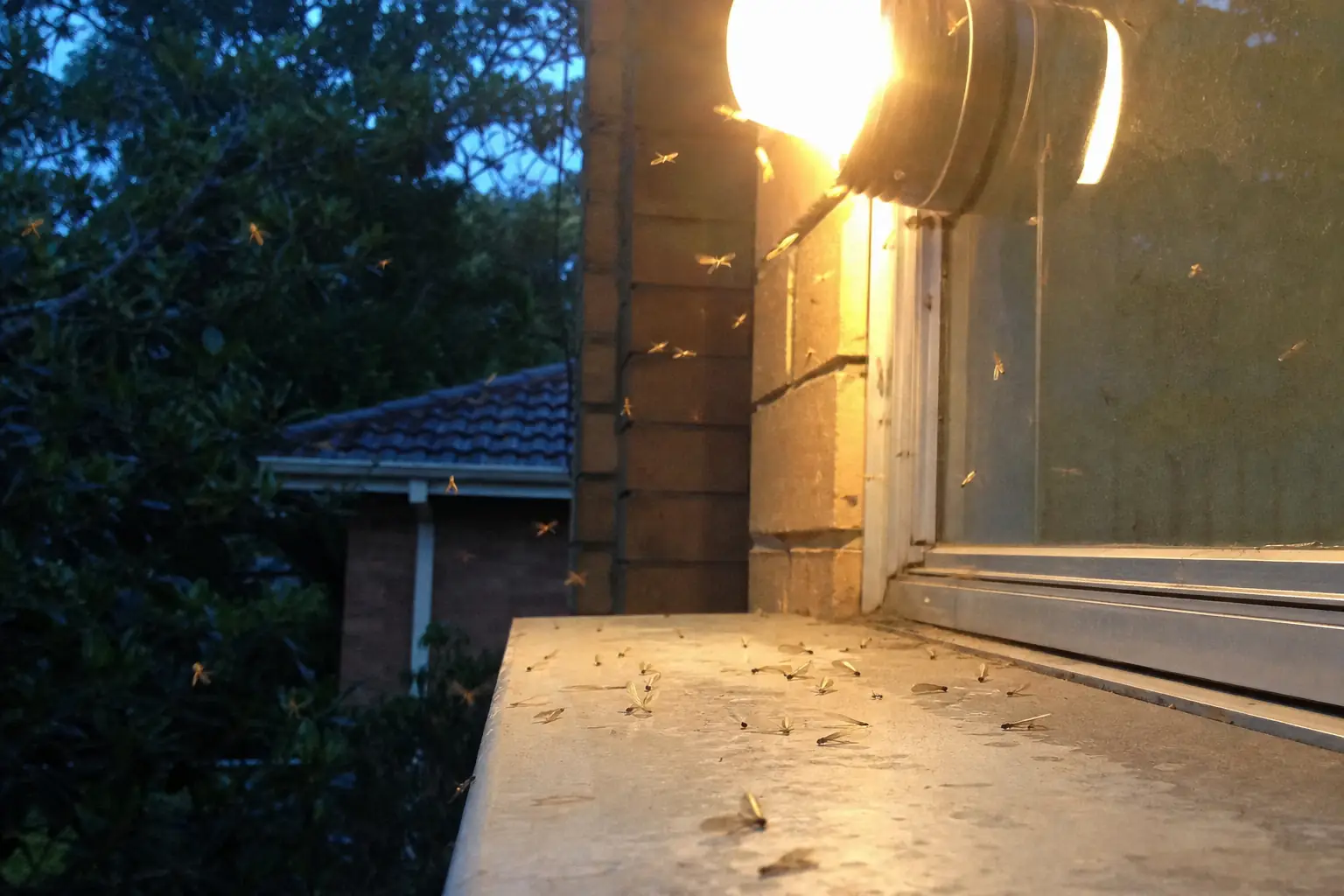
From roughly September to November, rising temperatures and humid evenings trigger mature subterranean termite colonies to release alates — winged reproductive termites whose job is to fly out, pair up and start new colonies. This is the most visible moment in a termite colony’s otherwise hidden life cycle.
A colony only produces alates once it is well established. So when swarmers appear around your street lights, verandah or windows, it means at least one mature colony is active somewhere nearby — in a tree stump, garden, neighbouring property or, less commonly, inside a building.
Most alates die quickly and only a small number succeed in founding new colonies. The swarm itself is not the main risk. The information it carries is: established termite activity exists close enough to reach your home.
- Swarming is concentrated on warm, still, humid evenings, often before or after rain.
- Shed wings on windowsills, decks or spider webs are a common after-the-event sign.
- A swarm nearby does not confirm your house is infested — it confirms a mature colony is in the area.
Flying termites or flying ants? How to tell the difference
Many spring sightings turn out to be flying ants, which swarm in similar conditions. The two are easy to confuse at a glance but simple to separate up close, and a photo is usually enough for a technician to give you a first read.
Termite alates have straight, beaded antennae, two pairs of wings of equal length, and a fairly uniform body without a pinched waist. Flying ants have elbowed antennae, a clearly pinched waist, and forewings noticeably longer than the hind wings.
- Termites: straight antennae, equal wings, thick waist, pale to dark brown body.
- Ants: elbowed antennae, pinched waist, unequal wing pairs.
- If unsure, photograph a few insects and some shed wings against a plain background.
Found flying termites or mud leads? Do this first
The most important rule is also the least intuitive: do not spray. Surface sprays kill a few visible insects but push the rest of the colony to retreat or reroute, making activity much harder to trace during an inspection. The same goes for mud leads — the earthen tubes termites build over surfaces they cannot eat through.
If you find swarmers indoors, emerging from a wall, skirting board or window frame, treat it as a priority: indoor emergence can indicate activity within the building itself rather than just nearby. Leave the exit point undisturbed.
Take photos of the insects, wings and any mud leads, note where and when you saw them, and book a termite inspection. A licensed technician can then assess visible activity, moisture conditions and risk areas while the evidence is intact.
- Do not spray swarmers, break mud leads or pull off damaged timber before inspection.
- Photograph what you see and note the location, date and time.
- Swarmers emerging from inside the house warrant the most urgent booking.
Moisture and garden timber: managing what termites love
Subterranean termites follow moisture. Leaking taps and hot water overflows, blocked weep holes, poor subfloor ventilation, garden beds and mulch piled against external walls, and watering systems spraying the slab edge all create the damp conditions that draw colonies toward a building.
Timber in the garden is the other half of the equation. Untreated sleepers, stacked firewood against the house, old stumps, formwork left under decks and timber fence lines in soil contact give termites both food and shelter close to the structure. Spring is a good time to walk the boundary and remove or lift what you can.
- Fix leaks and keep weep holes clear of soil, mulch and render.
- Store firewood and spare timber off the ground and away from walls.
- Keep garden beds, mulch and irrigation off the slab edge and external walls.
Annual inspections, and which Sydney homes carry higher risk
A professional termite inspection at least once every 12 months is a common recommendation for Sydney homes, and spring swarming season is a natural prompt to book if your last inspection is more than a year old. An inspection covers accessible internal and external areas, moisture-prone zones, subfloor and roof void access and conducive conditions, and gives you a documented baseline.
Risk is not evenly spread. Established suburbs with mature trees, older timber-framed housing and larger gardens tend to see more termite pressure than newer, denser areas. Homes in leafy districts such as Castle Hill and Epping, where original timber houses sit among established gum trees, are typical examples of properties that benefit from a disciplined annual schedule.
If you are buying a home, the same logic applies before settlement: a timber pest inspection ahead of purchase is far cheaper than discovering an established problem afterwards. And if this spring brings swarmers to your windows, treat it as the calendar reminder it is.
- Book an inspection if more than 12 months have passed, or sooner after any sighting.
- Older timber homes near established trees or bushland deserve shorter intervals.
- Keep inspection reports — they build a property history that helps future assessments.
Related pages
FAQs
Are flying termites a sign my house has termites?
Not necessarily. Swarmers mean a mature colony is active somewhere nearby, which could be a stump, garden or neighbouring property. However, swarmers emerging from inside your home — from walls, skirting boards or window frames — point to activity in the building and deserve an urgent inspection.
Should I spray flying termites when I see them?
No. Spraying kills a handful of visible insects while pushing the colony to retreat or reroute, which makes the source much harder to trace. Photograph them, note the location and book an inspection instead.
What do termite mud leads look like?
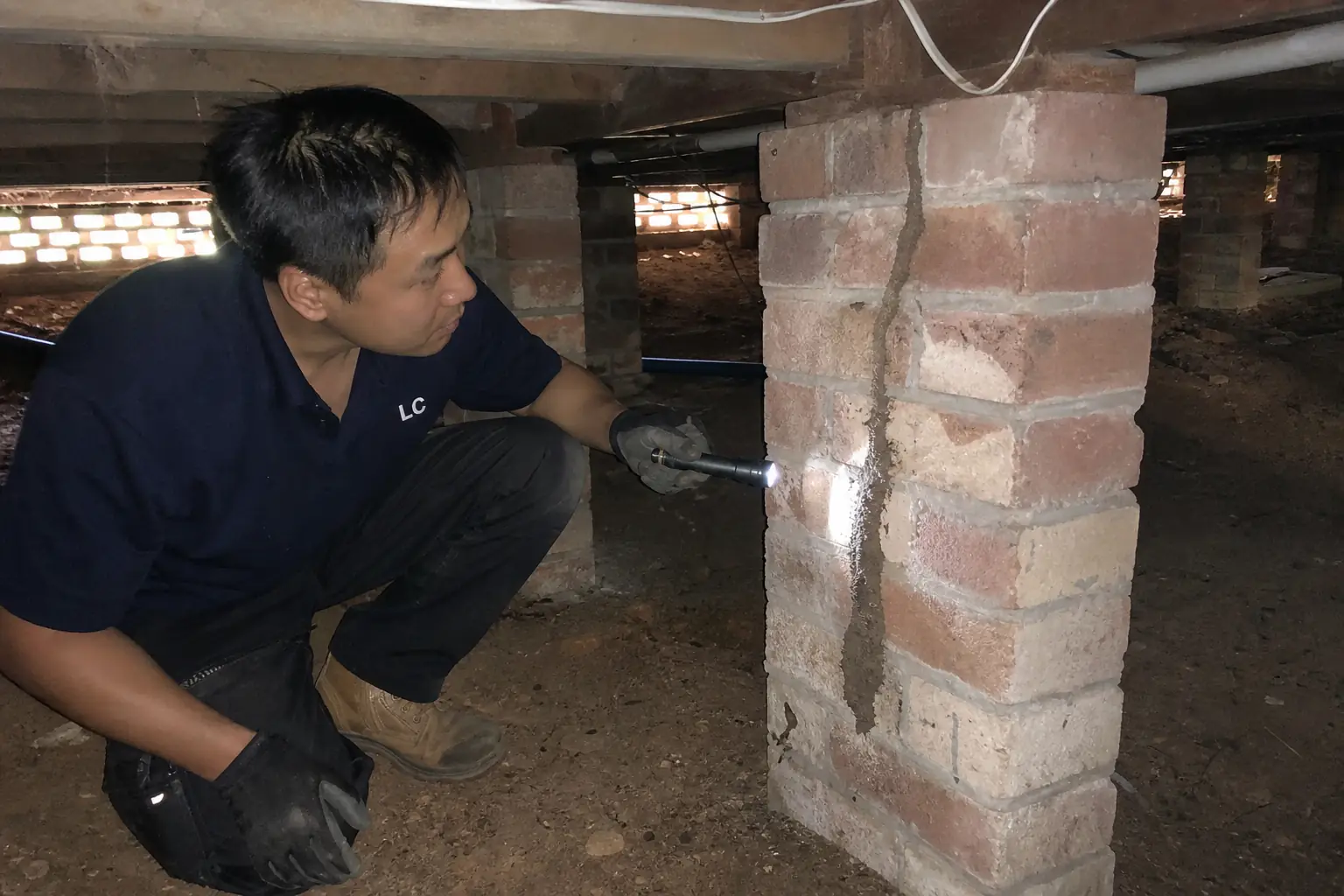
Mud leads are pencil-width earthen tubes running over surfaces termites cannot eat through, such as brick piers, slab edges, foundations or metal caps. They protect termites from light and dry air. Leave them intact — broken leads are quickly abandoned and the evidence is lost.
How often should Sydney homes get a termite inspection?
At least once every 12 months is a common professional recommendation, with shorter intervals for older timber homes, properties near bushland or mature trees, and homes with previous termite activity or ongoing moisture issues.
Next step
Match the issue to a listed service
Use the Price List to compare standard service categories, then send the service address, property type, access notes and preferred time so the team can check booking availability.